

The Blog®/ Genos Arm: From Social Media to Reality
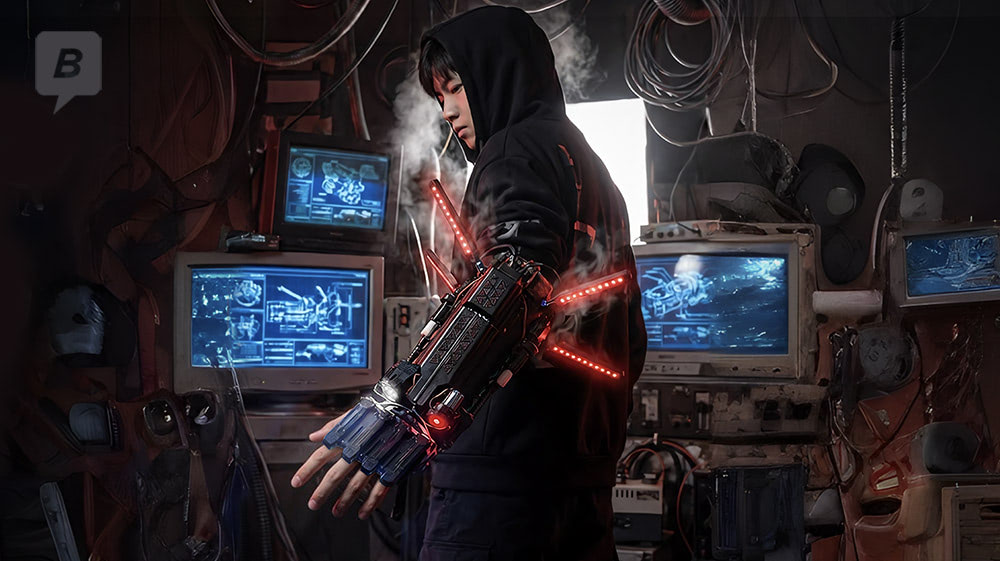
In this exclusive post, we talk about how a Japanese manga, a cosplayer and the power of social media created one of the coolest wearable gadgets ever made: The Genos Arm.
While modern society is rapidly moving towards a world of unreal things created by digital tools and artificial intelligence, there’s a totally different force moving in the opposite direction: from fiction to real life.
If you're into manga, anime or Japanese popular culture in general, you're probably familiar with Genos, also known as the “Demon Cyborg” and one of the main characters in the Japanese manga series, One Punch Man.
For those not familiar with the world of One Punch Man, this exclusive article will give you a brief background about its origin and social impact that go beyond printed books, computer screens and social media.

Credits: ONE, Yusuke Murata/SHUEISHA Originally created by Japanese manga artist "One" in 2009 and then further popularized by the illustration of Yusuke Murata in 2012, One Punch Man (ワンパンマン) can be broadly defined as a unique blend of satire and action.
The manga story centers around a fictional character named Saitama, a superhero who can defeat his opponents with a single punch. While Saitama represents the absurdity of invincible heroes, Genos, another character in the series, provides the emotional anchor of the story.
Contrasting with Saitama’s existential boredom and super human powers, Genos' struggles highlight the human side of heroism. Through Genos, readers are reminded that heroism is not only about strength but also about resilience, sacrifice, and the pursuit of justice. His presence balances the narrative, ensuring that One Punch Man is not just a parody but also a story with genuine emotional depth.
Genos has had a significant cultural impact since the manga was released. His spiky blond hair, glowing eyes, and mechanical arms has become iconic in anime fandoms and cosplay events worldwide. Genos’s cyborg body features and constant upgrades mirror the human desire to grow and adapt.
He represents a modern archetype: the technologically enhanced hero who must reconcile his humanity with his mechanical nature. This archetype has appeared in classics like Ghost in the Shell and Dragon Ball Z, but Genos brings a fresh perspective by combining raw emotional drive with futuristic enhancements.
In the universe of cosplaying fairs and events, Genos is one of the most popular and mimicked manga characters, making it a constant source of inspiration for personal productions that go from simple spiky hairstyles to more advanced wearables with electric and mechanical features.
High-tech cosplayers with unbelievable skill and professionally made productions took social media by storm in recent years, elevating artists like Denmark-based Jonas Zibartas to the social spotlight.
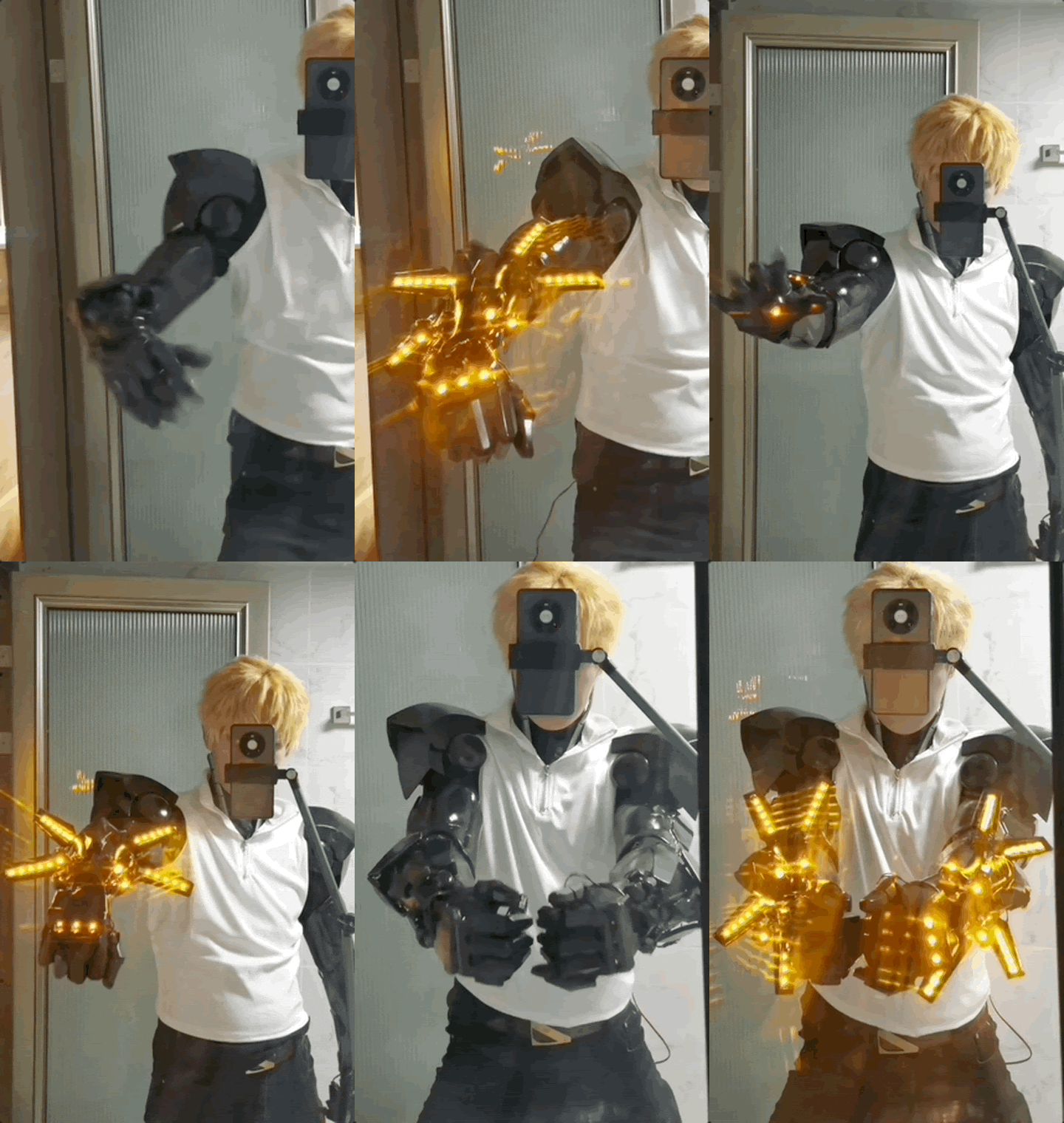
Credits: @手工阿强 (Aqiang) More recently, another cosplayer named "Aqiang" (手工阿强) started to become very popular on Douyin (Chinese Tik Tok), due to his highly sophisticated and well-crafted creations featuring a full Genos costume, which included a mechanical arm with moving parts, smoke effects and other impressive features.
A very talented cosplay artist known for creating high-quality, complex and creative costumes, Aqiang describes himself as a prop maker driven by "interest" and focuses on building "cool, interesting, and creative" equipment.
He is widely recognized for his technical ability to create functional-looking mechanical parts, such as the highly detailed Genos transforming arm props and full armor sets. His work often involves "foamsmithing" and complex electronics to achieve special effects like lighting and mechanical movement.
Besides his famous Genos creation, he has also tackled ambitious projects around Metal Gear's Raiden or his Iron Man’s armor, showcasing his ability to integrate electronics and engineering into cosplay.
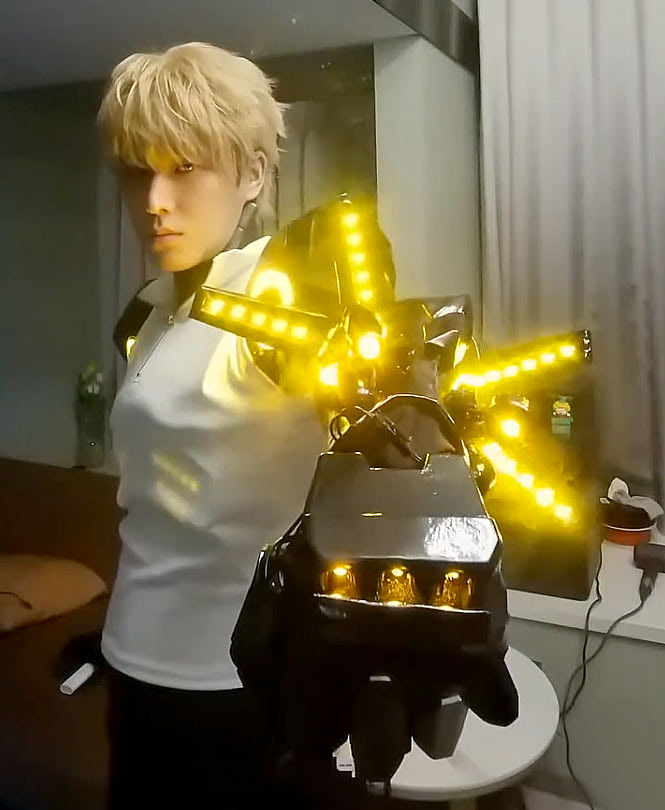 Aqiang does not mass-produce costumes or take on commissions. With craftsmanship and authenticity being part of his essence, his follower base and social media numbers continue to grow as viewers worldwide understand that his creations are motivated by love for the characters and the craft itself rather than financial gain.
 When Aqiang unveiled his home-made Genos arm, it quickly became a viral sensation in Asia first, but it didn't take long for it to become an instant hit also on Instagram, Youtube, Tik Tok and other major western social media platforms.
The mechanical arm, complete with glowing lights and intricate detailing, captured the imagination of fans worldwide. What made it remarkable was not just its accuracy but the fact that it was built entirely by hand, showcasing the potential of DIY cosplay craftsmanship.
Soon after, cosplayers across the globe, ranging from places like the United States and Argentina to Indonesia and Australia, began attempting to replicate his work, often falling behind in terms of skills and craftsmanship...
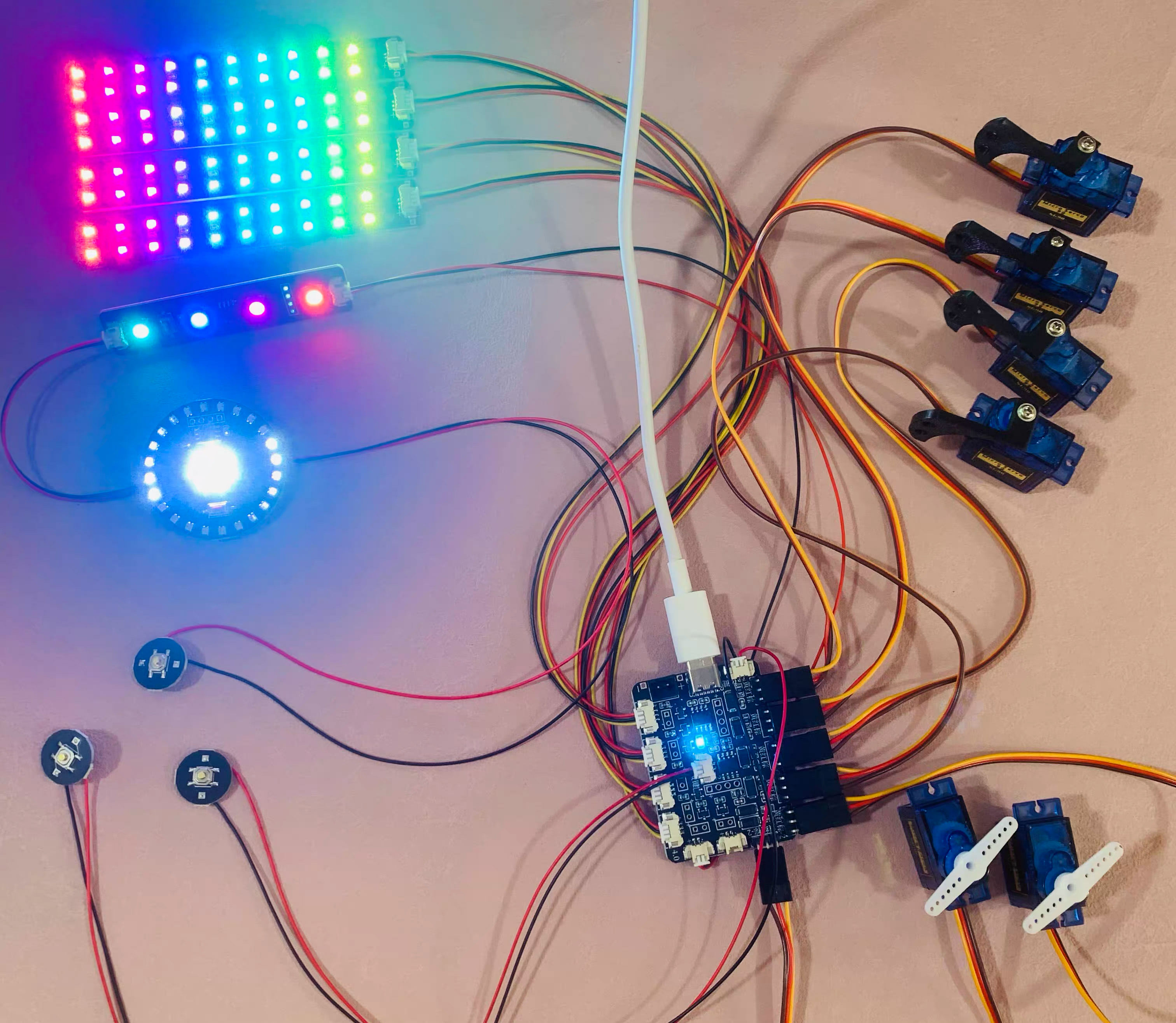
Animatronics kit with controller, servos and LEDs Some tried to follow Aqiang’s detailed process, using similar materials and wiring to recreate the glowing effects, while others improvised with cardboard, foam, and LED strips to achieve a more accessible version.
While some succeeded and were able to put together interesting pieces with tangled cables, smoke generators and LED lights powered by complex circuitry, others ended up wasting hours of work and expensive components or even getting injured.
These attempts varied in complexity, but they all reflected the same admiration for Aqiang’s original design. The phenomenon also highlighted the global nature of cosplay culture. Aqiang’s Genos arm was not just a costume piece; it became a shared project across borders, connecting fans through creativity and fandom.
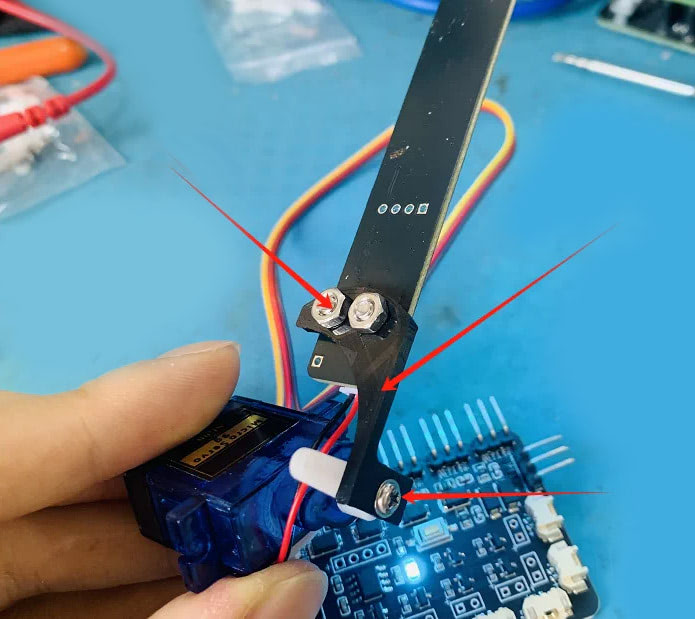 To put together a wearable piece like the one showcased by Aqiang, several skills and knowledge about different aspects of the crafting process were necessary: 3D-printing, electronics, mechanics, programming, some basic knowledge in ergonomics and maybe physics.
The demand for such prop crafting at home after videos started to go viral resulted in the appearance of DIY at home kits that came with all the most important parts pre assembled and ready to use, reducing the complexity and crafting time, leaving only the 3D printing or foam-smithing for the hobbyist to figure out.
Manufacturers of parts for RC cars saw an opportunity and different commercially available kits started to show up. They included the motherboard controller (used to synchronize all the effects and control everything), fog atomizers that generate the smoke effect, several servos used to make the parts move, light panels, wires, and so on.
Still, even with pre-assembled kits available, most results were clunky, ugly, erratic or not as good as the piece created by Aqiang.
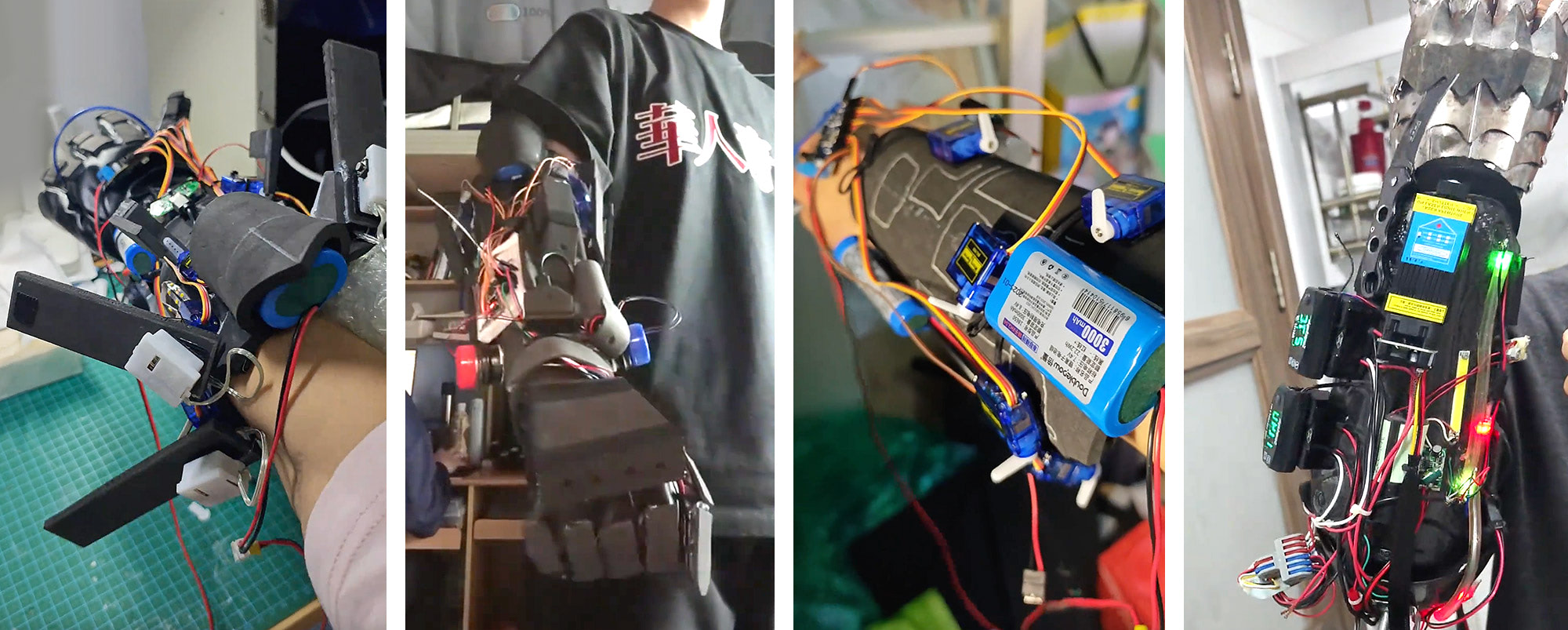
Social media prototypes by fans across the globe
The spread of home-made Genos arm experiments caught the attention of a small studio specialized in mechanical toys. With prior experience in electronics, mechanics and lighting solutions, the young and very skilled team at Dimensions Toys decided to embark on a mission that would bring to life the dream of millions of manga fans and cosplayers across the globe: to create a mass-produced version of the famous Genos mechanical arm made by Aqiang and replicated by other prop makers and hobbyists across the globe.
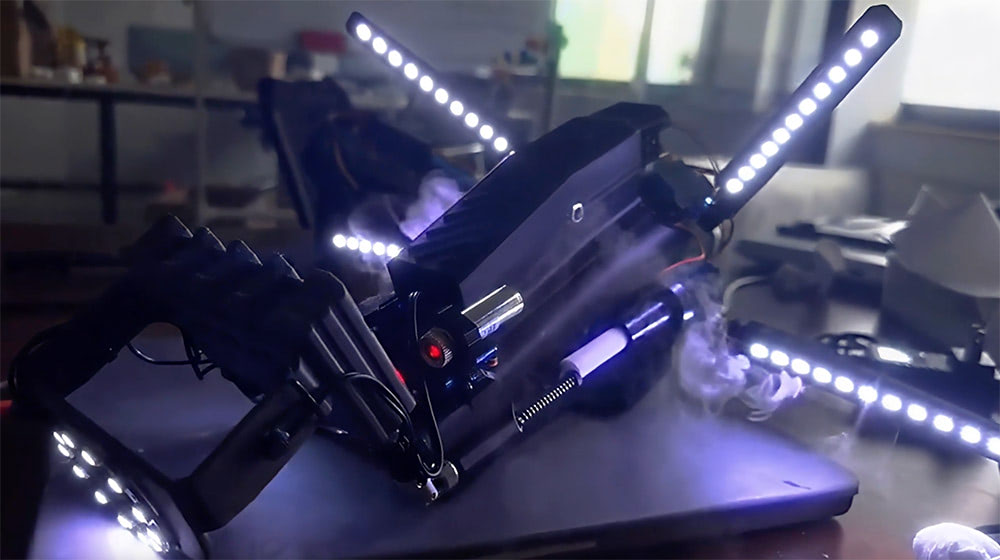 After several broken prototypes and failed attempts to recreate the moving parts - especially the mechanical wings that open and close - the group of young innovators finally put together a functional model that looked exactly like Aqiang's arm, including all the lighting, fog special effects and moving parts. The model seemed ready for prime time, but the studio decided to push the envelope even further...
A last goal was set by the team: to include voice controlled functions and spoken commands into the product, and that's no easy task. Any electronic engineer or product designer will tell you so.
While such a feat can be easily accomplished in computer software and mobile apps, creating a mass-produced product that includes such functionality powered by a dedicated hardware at a minimum cost requires specific expertise and special knowledge.
 One month later, the team created the foundation of the module called the "Dimensions Program", the world's first voice-enabled control system for animatronic systems, which perfectly suited their upcoming wearable product.
The spoken commands feature was achieved by combining readily-available technology with a high level of creativity, which resulted in an affordable and simple to mass-produce hardware that could be attached on the arm or any other upcoming wearable product in their product line.
After several hours of adjustments and fine tuning, the system was able to instantly recognize spoken commands in both English and Chinese, all via local processing running locally and without the need of any type of internet connection or other requirements that would add complexity to the product.
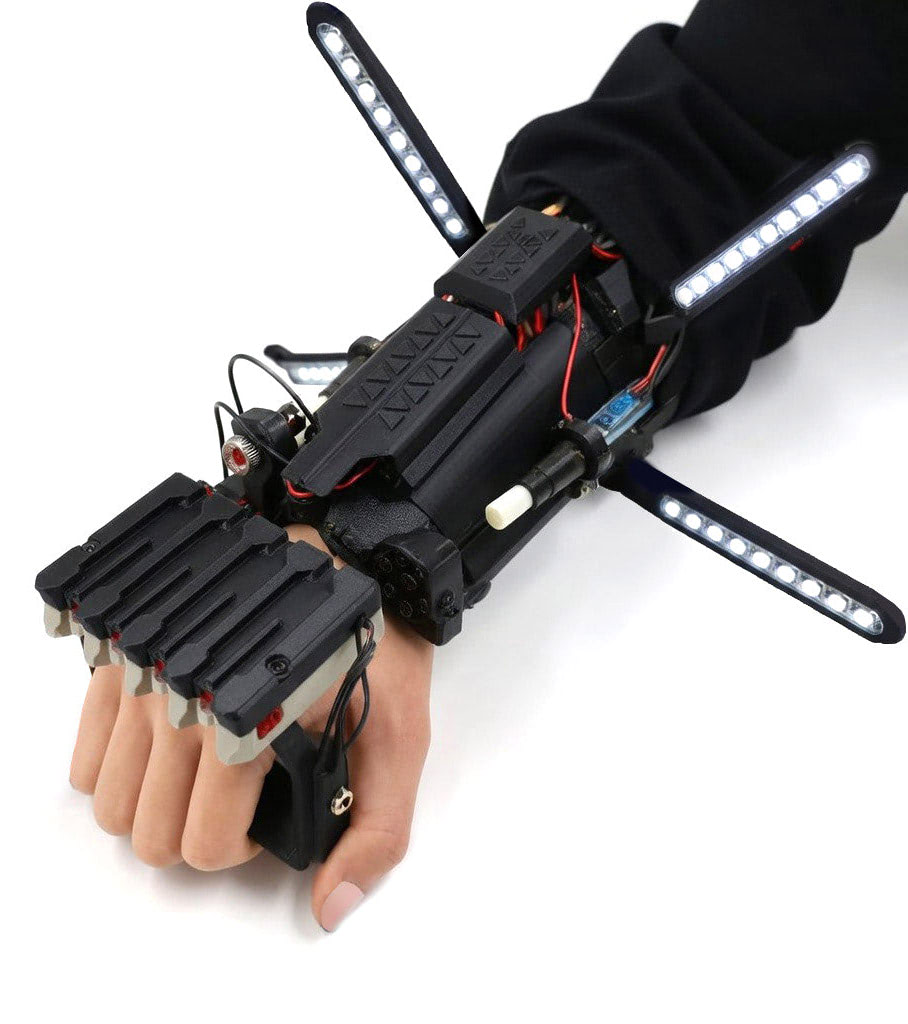
Now, the arm originally showcased by Aqiang is available for anyone to have and wear it on their body. Combining some of the coolest special effects ever made in a consumer-grade wearable toy, one of its most striking elements is the water mist smoke atomizer that produces bursts of vapor to simulate the energy and intensity of Genos’s mechanical power.
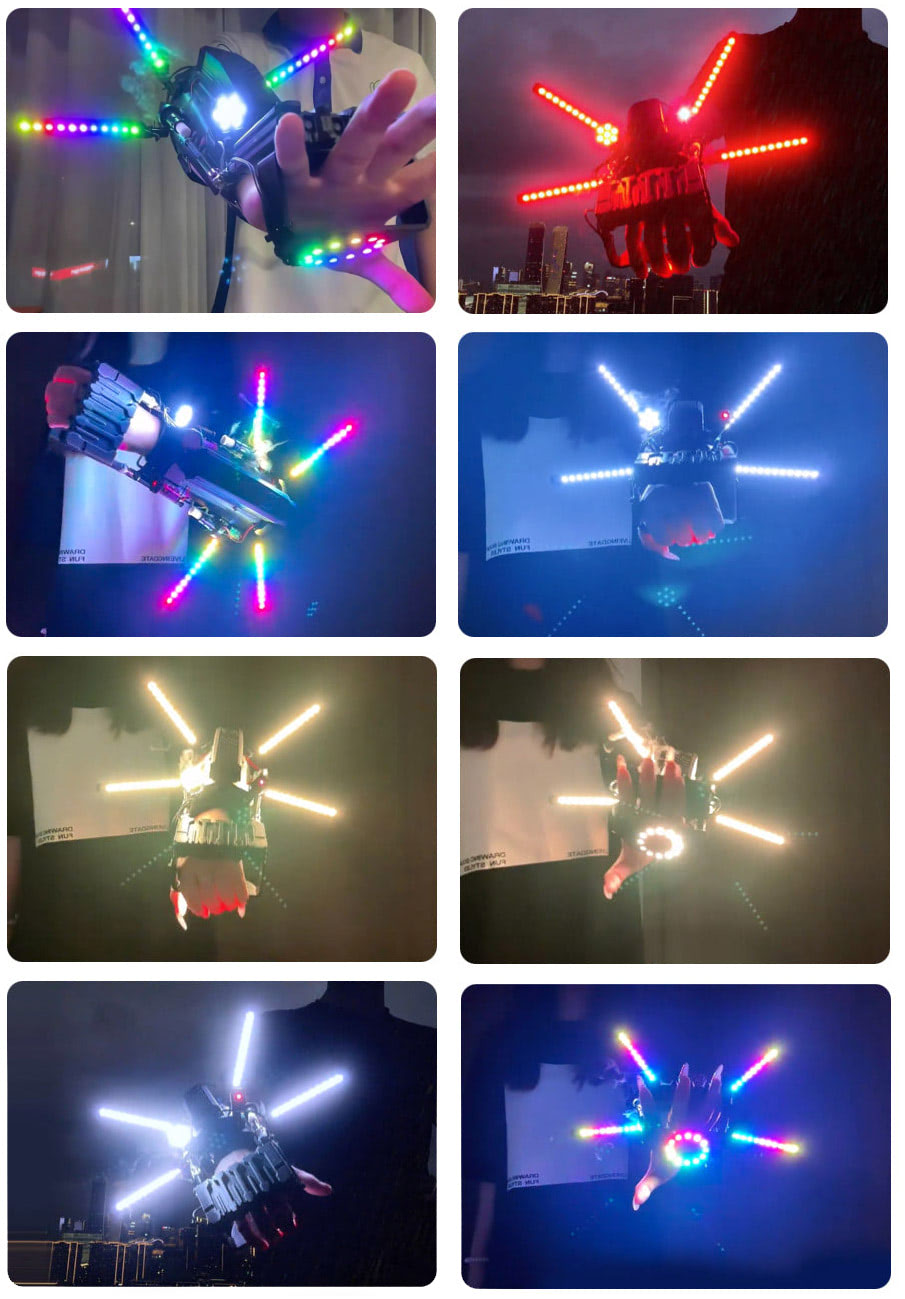 It also features multi-colored lights that can be set to 13 different vibrant color tones, a moving infrared search spotlight that pops open and closes upon voice commands, a radial LED ring on the palm, and a strong spotlight that also opens and closes automatically.
 Additionally to the manual button activation, voice and sound effects are integrated to enhance the animatronic movements. You can use spoken commands to control the arm’s features with spoken prompts.
Never before in modern history, there been such a case or story showing how powerful the connection between popular culture, fandoms, social media, and consumer demand can be.
Back in the 70s and 80s, when franchises like Star Wars took toy stores by storm and social media was something out of a Star Trek episode, such products came to life as part of a bigger vision and business strategy of the corporations themselves.
Today, any fan with passion, talent and resilience out of a bedroom can transform dreams into reality and create waves in both digital and physical world.
You May Also Like
 |
 |
 |
If you're a brand, label or designer looking to promote your business, get in touch with us to launch or sell your original products and discuss product placement or campaigns.