

The Blog®/ AI Surveillance vs. Streetwear Fashion
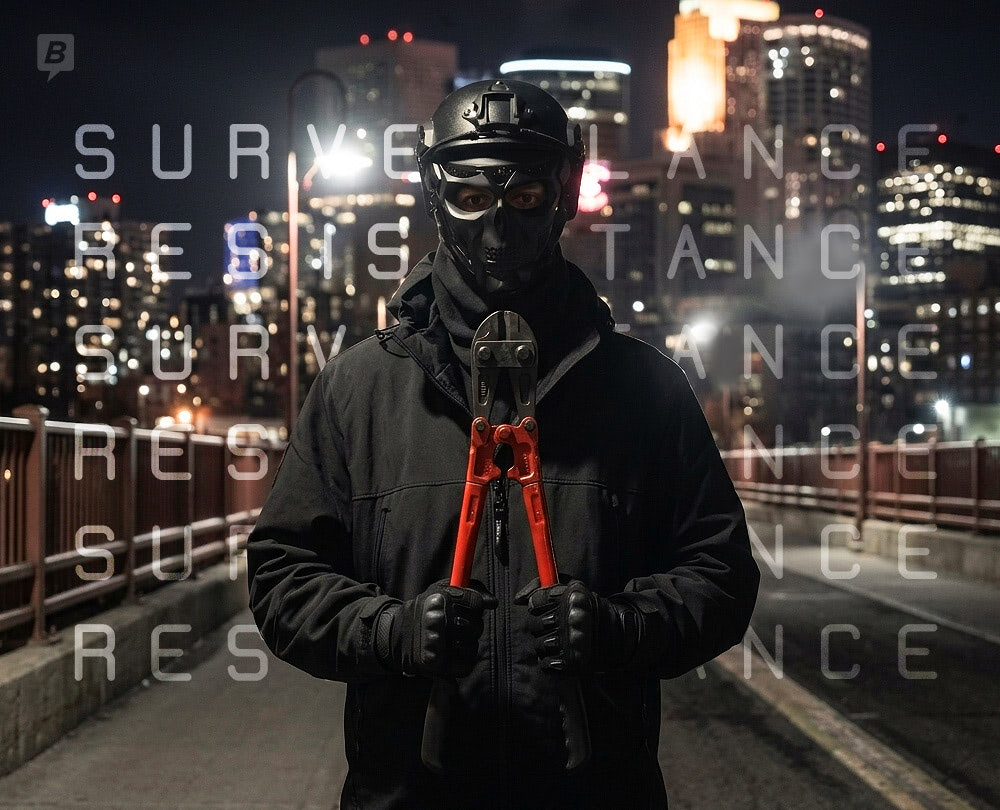
In this post we explore how anti-Flock activism and the rise of AI surveillance are influencing streetwear, and how a masked persona who goes by "NoMark" is turning resistance into a powerful cultural statement. Buckle up and let's dive right in.
The Crossroads of AI Surveillance
There’s a new type of friend in your neighborhood, though not the kind you’d invite over for dinner. It’s called a Flock camera, an AI-powered device designed to watch the streets and record every car that passes by. Unlike traditional CCTV, these cameras don’t focus on people but on vehicles, capturing license plates, make, model, and even distinctive features. The data is stored for weeks and shared across jurisdictions, giving police departments a powerful tool to track suspects, recover stolen cars, and investigate crimes.
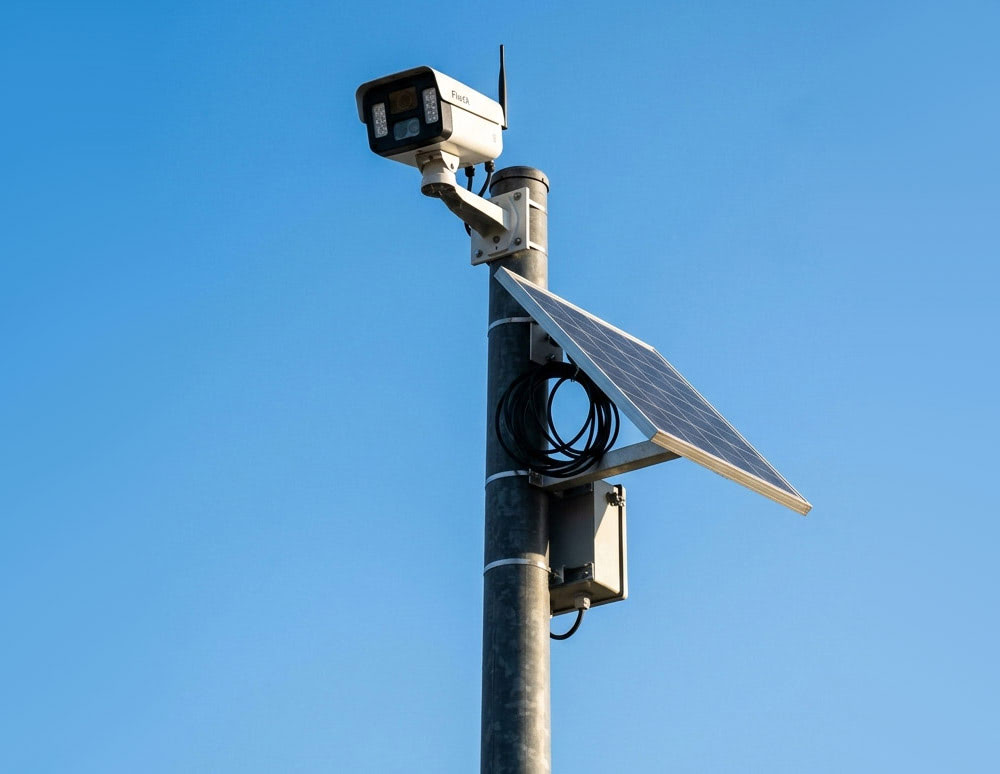
Your new friendly neighbor Supporters see them as indispensable for modern safety, but critics argue they represent something more unsettling—the normalization of mass surveillance in everyday life.
These new AI-powered devices, installed in thousands of communities, capture billions of license plates each month, recording not only the plate numbers but also the make, model, and distinctive features of vehicles.
Police departments hail them as indispensable tools for solving crimes, recovering stolen cars, and tracking suspects. Yet for many citizens, the cameras represent something far more troubling: the quiet normalization of mass surveillance in everyday life.
Flock Safety’s license plate reader cameras have become one of the most polarizing technologies in America today, sparking a nationwide debate that cuts across law enforcement, civil liberties, and even cultural identity.
Masked AI Resistance
License plates aside, artists, designers, and activists around the world have been experimenting with ways to fight back against facial recognition and AI surveillance, often turning disguise into a form of creative resistance. One of the earliest examples comes from the art collective CV Dazzle, which pioneered avant-garde makeup and hairstyles designed to confuse algorithms. By breaking up the symmetry of the human face with bold geometric patterns and unusual hair placement, they showed how fashion could double as a privacy shield.In Japan, designer Isao Echizen developed a pair of “privacy visors” that use near-infrared lights to blind facial recognition systems. To the human eye, the glasses look like futuristic accessories, but to a surveillance camera, they create a glowing mask that prevents accurate detection. This innovation highlights how technology itself can be repurposed to resist the gaze of AI.
Anti-Surveillance Clothing & Adversarial Textures
Streetwear culture has also embraced the fight against surveillance, giving a totally new dimension to the true meaning of "techwear" and the philosophy behind the fashion movement.Hoodies and scarves embedded with reflective materials have been designed to bounce back infrared light, making wearers invisible to night-vision cameras. These garments blur the line between utility and style, turning everyday fashion into a subtle act of rebellion against constant monitoring.
In Europe, artist Adam Harvey has created projects like Hyperface, which prints patterns resembling multiple fake faces onto clothing. When scanned by AI, the system becomes overwhelmed, mistaking the fabric for a crowd of people. This not only protects the wearer but also demonstrates how design can exploit the weaknesses of machine vision.
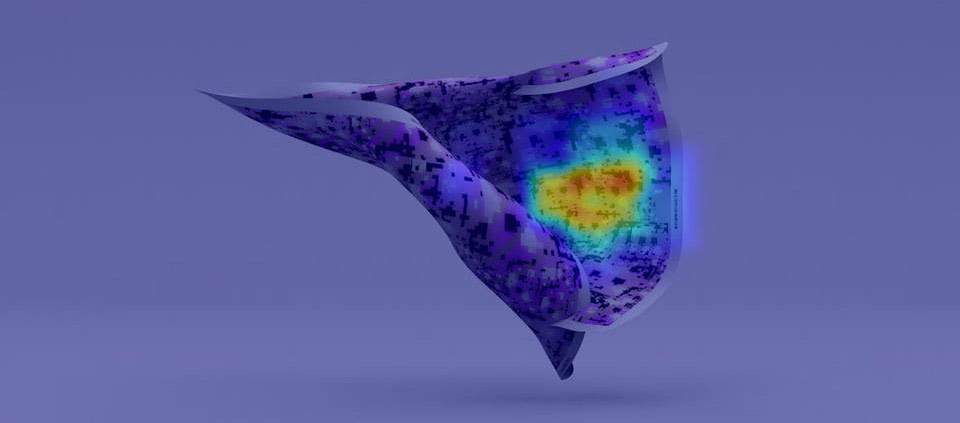
Adam Harvey's Hyperface (Adversarial Texture Scarf)
Cap_able, an Italian fashion brand founded by designer Rachele Didero, and 404 Apparel, a streetwear collective based in the United States, both experiment with what is known as "adversarial textures", which are computer-generated patterns woven or printed into clothing that are specifically designed to confuse AI facial recognition systems.
These designs exploit weaknesses in machine vision by presenting distorted, face-like shapes or disruptive motifs that cause algorithms to misidentify or fail to detect the wearer. Cap_able’s knitwear collection integrates these patterns directly into textiles, making them durable and wearable while raising awareness about biometric surveillance, while 404 Apparel leans into urban aesthetics, embedding similar disruptive prints into streetwear to merge activism with fashion.
The Minneapolis Battleground
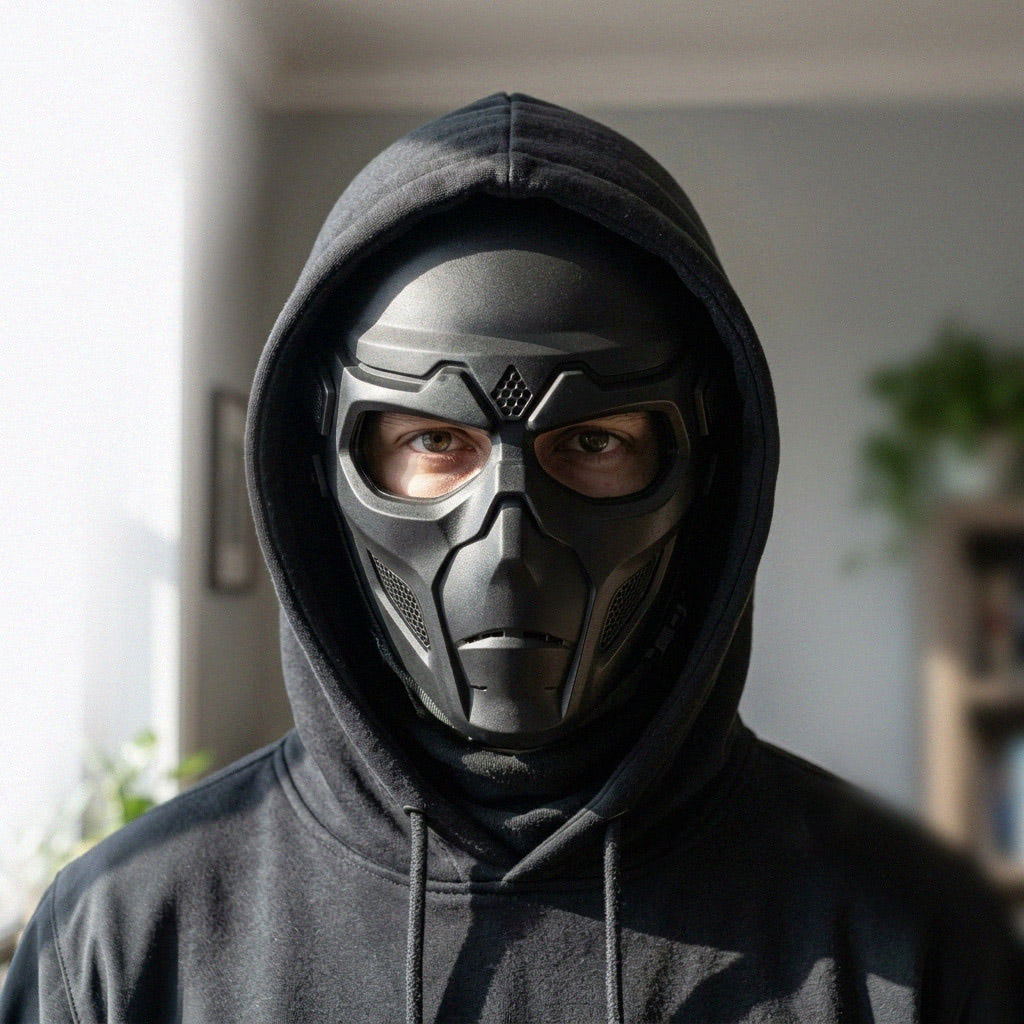
NoMark: Civil Rights Hero or Vandal? Known for celebrities like Prince and the world-famous Twin Cities, Minneapolis is now facing a new type of dichotomy: civil liberties versus public safety.
The growing backlash has given rise to a new wave of modern-day activism emerging from Minneapolis, embodied most vividly by the masked figure known as NoMark, who has become a viral symbol of resistance, clad in black and armed with tools to disable Flock cameras.
His actions, documented and shared online, have attracted hundreds of thousands of followers who see him as a kind of digital-age folk hero.
To his supporters, NoMark is not a criminal but a defender of privacy, a reminder that unchecked surveillance erodes freedoms that are supposed to be fundamental.
His aesthetic (a mask, dark clothing, and anonymity) has itself become a cultural statement, blending fashion with protest in a way that resonates with younger generations skeptical of AI-driven control.
The movement against Flock cameras is not limited to one activist. Online communities such as DeFlock America have grown rapidly, sharing maps of camera locations and strategies for resistance. These groups frame their actions as civil disobedience, arguing that the cameras collect data indiscriminately, sweeping up information on ordinary citizens without warrants or oversight.
Concerns extend beyond crime prevention: critics warn that such systems could be misused to monitor political activity, track individuals seeking reproductive healthcare, or simply create a chilling effect on public life. In response, law enforcement agencies have begun to classify anti-Flock activism as a security threat, leading to arrests and prosecutions that further inflame the debate.
At its core, the controversy reflects a deeper struggle over the role of AI in society. Flock cameras are marketed as “smart safety,” but their critics argue they embody surveillance capitalism, where technology harvests data from daily life under the guise of protection. The tension between public safety and privacy is not new, but the scale and automation of AI surveillance make it more urgent than ever.
NoMark’s rise illustrates how resistance can take on symbolic power, merging digital activism with cultural aesthetics. His masked persona is not just about hiding identity. It is about reclaiming agency in a world where AI systems increasingly dictate the terms of visibility.
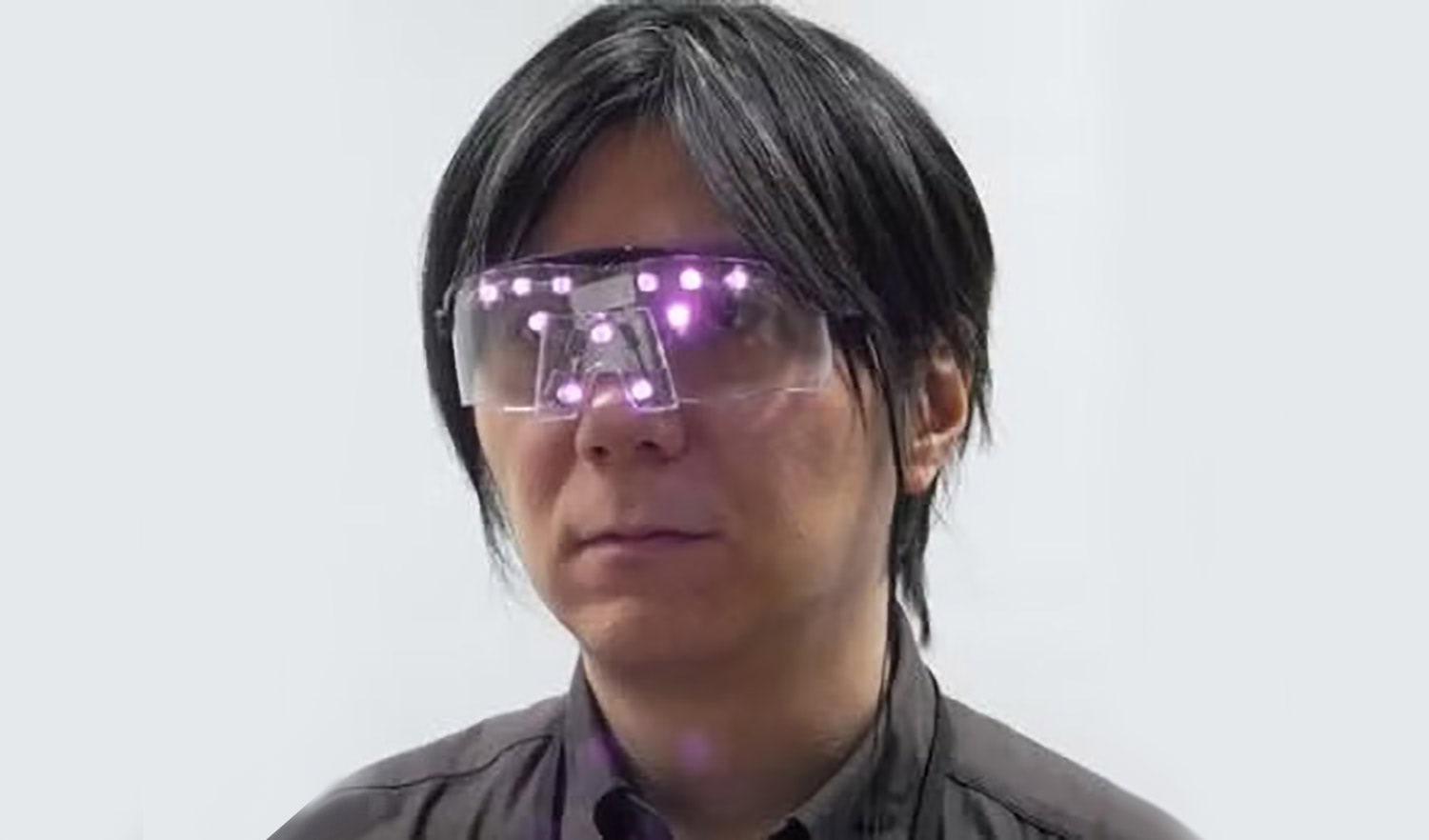
Isao Echizen's Privacy Visor (Credit: Tokyo’s National Institute of Informatics) The implications ripple outward. Cities across the country are reconsidering or banning Flock deployments amid lawsuits and public pressure. Legal battles highlight the lack of clear frameworks for balancing safety with civil liberties.
Meanwhile, the cultural impact is undeniable: fashion, anonymity, and protest have fused into a new counterculture that challenges the dominance of AI surveillance.
What began as a fight over cameras has become a broader conversation about the future of freedom in an age where technology watches everything.
The anti-Flock movement is more than a protest; it is a flashpoint in the ongoing negotiation between safety and liberty, technology and humanity. In NoMark’s mask and in the growing chorus of dissent, we see the contours of a society grappling with the consequences of AI not just in policing, but in fashion, culture, and everyday life.
Together, these cultural movements show how the battle against AI surveillance is not confined to courtrooms or policy debates. It is being fought in the streets, in studios, and in wardrobes, where fashion becomes a weapon. Whether through makeup, reflective fabrics, or masks, people are reclaiming their right to privacy by turning disguise into art, fashion, and activism.
To wrap things up: In a very near future where facial recognition and mass surveillance are omnipresent 24/7, how much of your fashion choices will be made to protect the few remaining rights you have to identity and privacy?
You May Also Like
 |
 |
 |